Tips To Aid Sleep
- Download Poster
- View Poster
- May 22, 2026
Tips To Aid Sleep
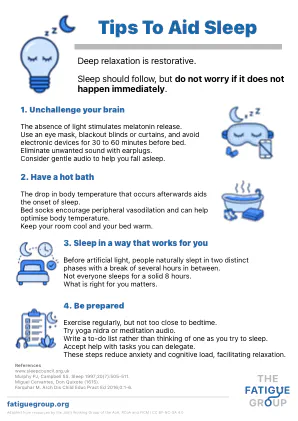
Deep relaxation is restorative. Sleep should follow, but do not worry if it does not happen immediately.
1. Unchallenge your brain
The absence of light stimulates melatonin release. Use an eye mask, blackout blinds or curtains, and avoid electronic devices for 30 to 60 minutes before bed. Eliminate unwanted sound with earplugs. Consider gentle audio to help you fall asleep.
2. Have a hot bath
The drop in temperature the body undergoes afterwards aids the onset of sleep. Bed socks encourage peripheral vasodilation and can help optimise body temperature. Keep your room cool and your bed warm.
3. Sleep in a way that works for you
Before artificial light, people naturally slept in two distinct phases with a break of several hours in between. Not everyone sleeps for a solid 8 hours. What is right for you matters.
4. Be prepared
Exercise regularly, but not too close to bedtime. Try yoga nidra or meditation audio. Write a to do list rather than thinking of one as you try to sleep. Accept help with tasks you can delegate. These steps reduce anxiety and cognitive load, facilitating relaxation.
References
- www.sleepcouncil.org.uk
- Murphy PJ, Campbell SS. Sleep 1997;20(7):505-511.
- Miguel Cervantes, Don Quixote (1615).
- Farquhar M. Arch Dis Child Educ Pract Ed 2016;0:1-6.